How to Maximize Solar Output in Winter
Winter is the hardest season for solar: the sun is lower, days are shorter, and panels are more likely to be shaded, dirty, or covered in snow. But with the right angles, wiring, and usage habits, you can still squeeze surprising power out of a winter sun.
This guide focuses on practical, high‑impact tweaks to get more winter watts from rooftop, ground‑mount, and portable solar panels feeding solar generators or battery banks.
1. Steepen Your Panel Angle for Winter Sun
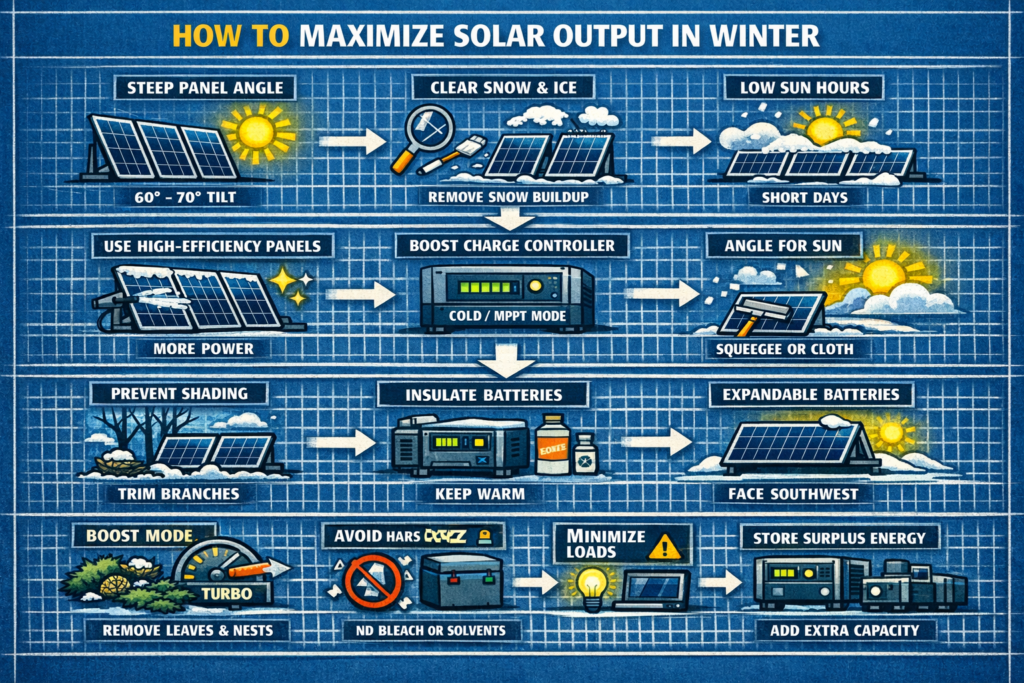
Winter sun rides low in the sky, so panels should be tilted more upright than in summer.
| Goal | Angle Rule |
|---|---|
| Year‑round average | ≈ Your latitude |
| Winter‑optimized | Latitude + 10–15° |
| Heavy winter use (off‑grid / backup) | Latitude + 15–25° |
Steeper tilt also helps snow slide off and reduces buildup of dirt near the bottom edge.
2. Eliminate Winter Shading
Shading hurts more in winter because the sun is lower and already weaker. Even small shadows from trees, chimneys, or nearby buildings can crush output.
- Walk the site in winter and note shadows at 9am, noon, and 3pm
- Trim branches that cast shadows on panels during core sun hours
- Prefer south‑facing arrays with clear sky from southeast to southwest
- For portable panels, move them 2–3 times per day to stay in full sun
On string‑wired arrays, one shaded panel can drag down the whole string—keep them as clean and unshaded as possible.
3. Keep Panels Clean and Clear of Snow
Winter brings dust, ash, and snow that can block light.
- Brush off loose snow with a soft, non‑metal snow brush or broom
- Never use metal shovels or sharp tools on glass
- Clean grime with soft water, mild soap, and a non‑abrasive brush
- Focus on the lower edge where dirt and slush accumulate
Even partial snow coverage can drop output to near zero—clearing just the bottom rows can restore a surprising amount of power.
4. Optimize Wiring for Low‑Light Conditions
In winter, you want your array to stay within the MPPT’s voltage window even in cold, low‑angle light.
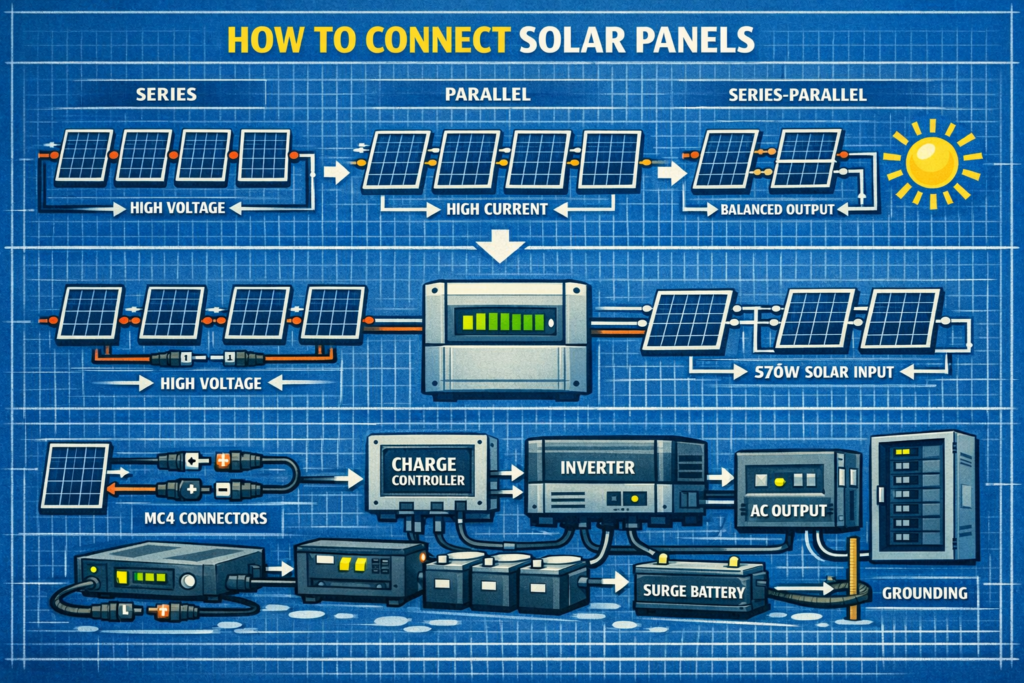
- Series wiring increases voltage—good for MPPT controllers and EcoFlow/BLUETTI‑style high‑PV inputs
- Parallel wiring increases current—better for low‑voltage solar generator inputs (many Jackery/Anker units)
- Use MC4 connectors and proper gauge wire to minimize voltage drop on long runs
| System Type | Winter Wiring Preference |
|---|---|
| MPPT charge controller (off‑grid) | Series or series‑parallel (stay under Vmax) |
| EcoFlow / BLUETTI with high PV voltage | Series or series‑parallel |
| Jackery / Anker with low PV voltage | Parallel (stay within V window) |
Always check the controller’s max PV voltage—cold weather raises panel voltage, so leave margin.
5. Right‑Size Your Battery for Short Winter Days
Winter gives you fewer sun hours, so you can’t rely on long charging windows. A slightly larger battery helps buffer cloudy days.
| Daily Winter Load | Recommended Battery Capacity |
|---|---|
| 500Wh/day | 800–1200Wh |
| 1000Wh/day | 1500–2000Wh |
| 2000Wh/day | 2500–4000Wh |
Plan for at least 1.5–2× your daily winter usage so you’re not running the battery to empty on every cloudy day.
6. Maximize Usable Sun Hours
In winter, every hour of clear sun matters.
- Start charging as soon as the sun hits the panels—don’t wait for “midday”
- For portable panels, re‑aim them 2–3 times per day (morning, midday, afternoon)
- Use the shadow trick: adjust until the panel’s shadow is directly behind it and shortest
- Prioritize charging batteries during the brightest hours; run heavy loads later
Think of winter solar as a “harvest window”—you want panels pointed and ready whenever the sun is available.
7. Prioritize Loads for Winter Solar
- Fridges and freezers
- Routers and low‑watt electronics
- LED lighting
- Device charging (phones, laptops)
- Efficient DC fans or circulation pumps
- Electric space heaters
- Resistive water heaters
- Large AC units or heat pumps
- High‑wattage tools for long periods
Use solar for essentials first. If you must run heavy loads, do it when batteries are full and sun is strong.
8. Monitor Performance and Adjust
Winter is where monitoring pays off.
- Watch your inverter, charge controller, or power station app for daily kWh/Wh
- Compare clear days before and after angle or cleaning changes
- Note what time of day you hit peak watts and how long it lasts
Small tweaks—like a 10–15° tilt change or moving a portable panel out of a tree’s shadow—can add hundreds of watt‑hours over a week.
FAQ: Maximizing Solar Output in Winter
Why is my solar output so low in winter?
Shorter days, lower sun angle, more shading, and more clouds all reduce production. Panels also get dirty or snow‑covered more often.
Should I change my panel angle for winter?
Yes, if possible. Aim for latitude + 10–15° or more if you rely heavily on winter solar.
Is winter solar even worth it?
Yes—especially for essentials like fridges, lights, and routers. You won’t match summer output, but smart setup can still cover critical loads.
Do I need more panels just for winter?
If winter performance is critical (off‑grid, cabins, backup), oversizing your array is often the most effective solution.
🔆 Explore More Solar Optimization Guides
Pair winter optimization with smart angles, wiring, and cleaning to get every watt from your system.
As an Amazon Associate, we earn from qualifying purchases. This does not affect our reviews or product recommendations.