Best Solar Generator for Off‑Grid Cabins – Reviews – Comparisons – Buyer Insight
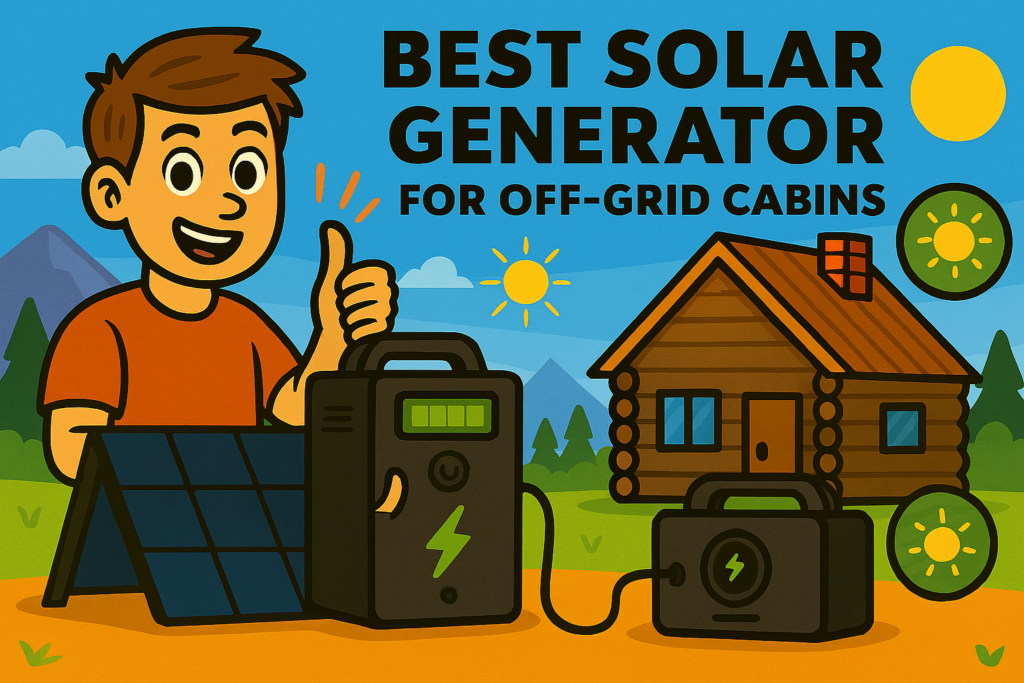
Solar generators are the backbone of off-grid cabin living. Whether you’re powering a 12V fridge, running lights and fans, charging tools, keeping communication systems online, or supporting a full homestead setup, the right solar-ready power station ensures your cabin stays functional year-round. Because cabins often face limited sunlight, harsh weather, and long periods without grid access, it helps to choose a unit with strong solar input, long-life LiFePO4 batteries, and a robust inverter capable of handling high-demand appliances.
This guide compares the best solar generators for off-grid cabins across real-world remote-living scenarios. Each recommendation includes inverter output, capacity, solar performance, and cabin-specific use cases so you can build a dependable off-grid power system.
Best Solar Cabin Generators — Quick Comparison
This comparison table gives you a fast overview of the top solar-ready generators for off-grid cabins. It highlights capacity, inverter strength, solar input, and best-use scenarios so you can quickly match a unit to your cabin’s power needs.
| Model | Best For | Capacity | Continuous Output | Solar Input |
|---|---|---|---|---|
| EcoFlow Delta Pro | Whole‑cabin power | 3600Wh | 3600W | 1600W |
| Bluetti AC300 + B300 | Expandable cabin systems | 3072Wh+ | 3000W | 2400W |
| Bluetti AC200MAX | Long-term off-grid living | 2048Wh | 2200W | 900W |
| EcoFlow Delta 2 Max | Cabin essentials | 2048Wh | 2400W | 1000W |
| Jackery Explorer 2000 Plus | Portable cabin backup | 2042Wh | 3000W | 1000W |
Best Solar Generators for Off‑Grid Cabins by Scenario
Off‑grid cabins require more than basic backup power — they need reliable, renewable, daily‑use energy. These recommendations cover the most common cabin scenarios, from weekend retreats to full‑time homesteads.
EcoFlow Delta Pro
Definition: This category is for cabin owners who want a whole‑cabin solar‑ready generator capable of powering major appliances and tools.
The EcoFlow Delta Pro delivers 3600Wh of LiFePO4 storage, a massive 3600W inverter, and 1600W solar input — enough to run refrigerators, freezers, power tools, fans, routers, and essential cabin circuits.
| Capacity | 3600Wh |
|---|---|
| Continuous Output | 3600W |
| Solar Input | 1600W |
| Best Use | Whole‑cabin power |
Cabin Runtime: Fridge (40–80 hours), lights (200+ hours), Starlink (40–60 hours), power tools (short bursts)
Pros
- Runs major cabin appliances
- Fast solar recharging
- Expandable to 25kWh+
Cons
- Heavy
- Premium price
Bluetti AC300 + B300
Definition: This category is for cabin owners who want a modular, expandable solar generator system for long‑term off‑grid living.
The Bluetti AC300 + B300 delivers 3072Wh per battery module, a 3000W inverter, and up to 2400W solar input — ideal for powering multiple cabin appliances during extended off‑grid stays.
| Capacity | 3072Wh+ (expandable) |
|---|---|
| Continuous Output | 3000W |
| Solar Input | 2400W |
| Best Use | Expandable cabin systems |
Cabin Runtime: Fridge (30–60 hours), lights (150–300 hours), CPAP (40–80 hours), tools (short bursts)
Pros
- Massive solar input
- Fully modular system
- Excellent for long outages or full‑time off‑grid living
Cons
- Requires external battery modules
- Large footprint
Bluetti AC200MAX
Definition: This category is for cabins in remote areas where solar recharging is essential and outages are the norm.
The Bluetti AC200MAX offers 2048Wh of LiFePO4 storage, a 2200W inverter, and 900W solar input — ideal for powering fridges, fans, lights, routers, and essential electronics for days at a time.
| Capacity | 2048Wh |
|---|---|
| Continuous Output | 2200W |
| Solar Input | 900W |
| Best Use | Long‑term off‑grid living |
Cabin Runtime: Fridge (20–36 hours), lights (100–200 hours), Starlink (20–30 hours)
Pros
- Excellent solar performance
- Expandable battery capacity
- Strong inverter for appliances
Cons
- Heavy for its size
- Slower AC charging than EcoFlow
EcoFlow Delta 2 Max
Definition: This category is for cabin owners who need reliable power for essential appliances during short‑to‑medium off‑grid stays.
The EcoFlow Delta 2 Max delivers 2048Wh of LiFePO4 storage, a 2400W inverter, and 1000W solar input — ideal for powering fridges, fans, lights, routers, and small appliances.
| Capacity | 2048Wh |
|---|---|
| Continuous Output | 2400W |
| Solar Input | 1000W |
| Best Use | Cabin essentials |
Cabin Runtime: Fridge (20–36 hours), lights (100–200 hours), CPAP (30–50 hours)
Pros
- Fast solar charging
- Strong inverter for appliances
- Expandable battery capacity
Cons
- Heavier than smaller units
- Premium mid‑range price
Jackery Explorer 2000 Plus
Definition: This category is for cabin owners who want a lightweight, portable solar‑ready generator for flexible off‑grid use.
The Jackery Explorer 2000 Plus delivers 2042Wh of storage, a 3000W inverter, and 1000W solar input — making it ideal for portable cabin power and emergency use.
| Capacity | 2042Wh |
|---|---|
| Continuous Output | 3000W |
| Solar Input | 1000W |
| Best Use | Portable cabin backup |
Cabin Runtime: Fridge (20–30 hours), lights (80–150 hours), Starlink (20–30 hours)
Pros
- High solar input for fast recharging
- Lightweight for its class
- Strong inverter for emergency loads
Cons
- Higher cost than budget units
- Expansion battery adds cost
Popular Off‑Grid Cabin Solar Accessories
These accessories help maximize solar performance, improve charging efficiency, and support reliable off‑grid cabin power year‑round.
400W Folding Solar Panel
High‑output portable solar panel for fast cabin recharging.
| Wattage | 400W |
|---|---|
| Use Case | Off‑grid cabin solar |
MC4 Solar Extension Cable
Allows flexible panel placement for maximum sunlight exposure.
| Length | 20–30 ft |
|---|---|
| Use Case | Cabin solar optimization |
12V LED Cabin Light Kit
Ultra‑efficient lighting solution for off‑grid cabins.
| Power Draw | 1–3W |
|---|---|
| Use Case | Cabin lighting |
Solar + Crank Emergency Radio
Reliable communication tool that works without grid power.
| Power Source | Solar + hand crank |
|---|---|
| Use Case | Emergency communication |
How to Choose the Best Solar Generator for Off‑Grid Cabins
Choosing the right solar generator for an off‑grid cabin starts with understanding your daily energy needs, seasonal sunlight availability, and whether your cabin is used for weekend retreats or full‑time living. Cabin loads range from refrigerators and freezers to routers, lights, fans, power tools, and communication gear. Because off‑grid cabins often face harsh weather and long periods without grid access, it helps to choose a power station with strong solar input, long‑life LiFePO4 batteries, and a robust inverter capable of handling high‑demand appliances.
| Factor | What to Consider |
|---|---|
| Battery Capacity | 3000–6000Wh covers most off‑grid cabin setups. |
| Solar Input | Higher input = faster recovery during cloudy weeks. |
| Inverter Output | 3000W+ handles fridges, freezers, tools, and heaters. |
| Battery Chemistry | LiFePO4 lasts 4–6× longer and handles cold weather better. |
| Surge Capacity | Tools and compressors require 2× surge to start. |
| Solar Panel Type | Rigid panels for permanent roofs; folding panels for portable setups. |
People Also Ask (Quick Answers)
What size solar generator do I need for an off‑grid cabin
Most cabins need 3000–6000Wh depending on appliances and usage.
Can a solar generator power a cabin refrigerator
Yes — 3000Wh+ units can run fridges for 24–60 hours depending on duty cycle.
How long does it take to charge a solar generator with panels
1200–2400W of solar typically recharges a 3000Wh unit in 2–4 hours of good sunlight.
Do solar generators work in winter
Yes — LiFePO4 performs well in cold climates, though solar output is reduced.
Real Cabin Runtime Examples
These examples show how long common cabin appliances can run on different battery capacities. Actual runtime varies based on temperature, device efficiency, and solar conditions, but these estimates provide a realistic baseline for off‑grid planning.
| Cabin Appliance | Typical Wattage | 3000Wh Unit | 4000Wh Unit | 6000Wh Unit |
|---|---|---|---|---|
| Refrigerator | 60–120W | 24–48 hours | 32–64 hours | 50–100 hours |
| Starlink Internet | 40–60W | 30–60 hours | 40–80 hours | 60–120 hours |
| LED Cabin Lighting | 5–10W | 200–400 hours | 300–600 hours | 500–1000 hours |
| 12V Water Pump | 60–100W | 20–40 hours | 30–50 hours | 50–80 hours |
Common Mistakes When Choosing a Cabin Solar Generator
- Underestimating solar input: Low‑watt panels charge too slowly during cloudy weeks.
- Choosing lithium‑ion instead of LiFePO4: Shorter lifespan and worse cold‑weather performance.
- Ignoring inverter size: Tools and compressors need 3000W+ to run safely.
- Buying panels without MC4 compatibility: Limits charging options during remote use.
- Assuming all power stations support passthrough charging: Many do not.
FAQ: Solar Generators for Off‑Grid Cabins
Can I run my cabin entirely on solar
Yes — with 4000–6000Wh of storage and 1200–2400W of solar panels.
Do I need a pure sine wave inverter for cabin appliances
Yes — it protects sensitive electronics and ensures stable performance.
Can I charge a solar generator with a gas generator
Yes — most units support AC charging from a generator as a backup to solar.
Is 2000Wh enough for a cabin
It works for weekend use; 3000–6000Wh is better for long‑term off‑grid living.
🌲 Explore More Off‑Grid Power Guides
Build a reliable, renewable cabin power system with our full collection of off‑grid guides.
As an Amazon Associate, we earn from qualifying purchases. This does not affect our reviews or product recommendations.