Best Portable Power Station for RVs – Reviews – Comparisons – Buyer Insight
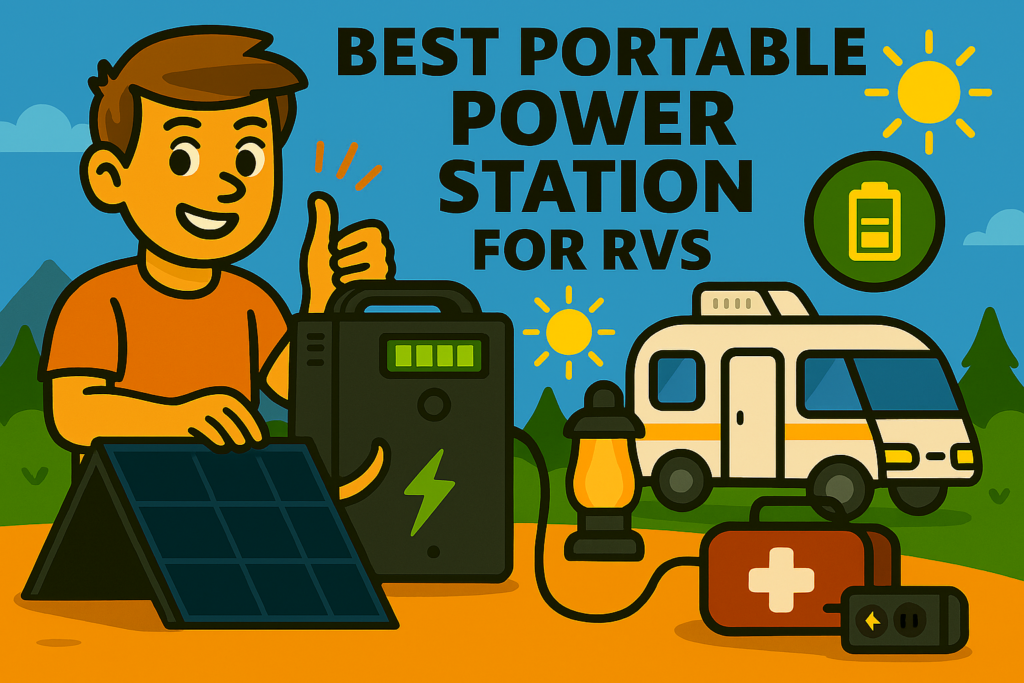
Portable power stations give RV owners the freedom to run appliances, charge devices, and stay powered during boondocking or shore‑power outages. Whether you’re running a microwave, powering Starlink, charging e‑bikes, or keeping your RV’s outlets live, the right power station provides clean, quiet, reliable energy without the noise and fumes of a gas generator. Because RVs use a mix of AC and DC loads, it helps to choose a power station with a strong inverter, high surge capacity, and fast solar input.
This guide compares the best portable power stations for RVs across real‑world scenarios. Each recommendation includes inverter output, capacity, solar performance, and RV‑specific use cases so you can choose the right unit for your rig.
Best RV Power Stations — Quick Comparison
This comparison table gives you a fast overview of the top portable power stations for RVs. It highlights inverter strength, capacity, solar input, and best‑use scenarios so you can quickly match a unit to your rig.
| Model | Best For | Capacity | Continuous Output | Solar Input |
|---|---|---|---|---|
| EcoFlow Delta Pro | Whole‑RV power | 3600Wh | 3600W | 1600W |
| Bluetti AC200MAX | Boondocking | 2048Wh | 2200W | 900W |
| EcoFlow Delta 2 | Light RV use | 1024Wh | 1800W | 500W |
| Bluetti EB70S | Small rigs | 716Wh | 800W | 200W |
| Jackery Explorer 1000 Plus | Portable RV power | 1264Wh | 2000W | 800W |
Best Portable Power Stations for RVs by Scenario
RVs use a mix of AC and DC loads, and different appliances have different surge requirements. These recommendations cover the most common RV power scenarios, from whole‑RV backup to boondocking and lightweight travel setups.
EcoFlow Delta Pro
Definition: This category is for RV owners who want whole‑RV power, including microwaves, AC units, induction cooktops, and high‑draw appliances.
The EcoFlow Delta Pro delivers 3600Wh of LiFePO4 storage and a massive 3600W inverter with 7200W surge — enough to run most RV appliances. Its 1600W solar input makes it ideal for off‑grid RV living.
| Capacity | 3600Wh |
|---|---|
| Continuous Output | 3600W |
| Solar Input | 1600W |
| Best Use | Whole‑RV power |
Pros
- Runs most RV appliances
- Huge solar input for off‑grid use
- LiFePO4 long‑life battery
Cons
- Heavy
- Premium price
Bluetti AC200MAX
Definition: This category is for RVers who camp off‑grid and rely heavily on solar charging.
The Bluetti AC200MAX offers 2048Wh of LiFePO4 storage, a 2200W inverter, and 900W solar input — ideal for powering fridges, lights, fans, Starlink, and small appliances during extended boondocking trips.
| Capacity | 2048Wh |
|---|---|
| Continuous Output | 2200W |
| Solar Input | 900W |
| Best Use | Boondocking |
Pros
- Excellent solar performance
- Strong inverter for RV appliances
- Expandable battery capacity
Cons
- Heavy for its size
- Slower AC charging than EcoFlow
EcoFlow Delta 2
Definition: This category is for RVers who need reliable power for electronics, lights, fans, and small appliances.
The EcoFlow Delta 2 delivers 1024Wh of LiFePO4 storage and an 1800W inverter — enough to run coffee makers, laptops, CPAP machines, and small RV appliances.
| Capacity | 1024Wh |
|---|---|
| Continuous Output | 1800W |
| Solar Input | 500W |
| Best Use | Light RV use |
Pros
- Fastest AC charging in class
- Strong inverter for small appliances
- LiFePO4 long‑life battery
Cons
- Not ideal for high‑draw appliances
- Expansion battery adds cost
Bluetti EB70S
Definition: This category is for van‑lifers, teardrop trailers, and small RVs with low power needs.
The Bluetti EB70S offers 716Wh of LiFePO4 storage and an 800W inverter — ideal for lights, fans, laptops, and small electronics.
| Capacity | 716Wh |
|---|---|
| Continuous Output | 800W |
| Solar Input | 200W |
| Best Use | Small rigs |
Pros
- Compact and lightweight
- Long runtime for small loads
- LiFePO4 long‑cycle battery
Cons
- Not suitable for large appliances
- Slower solar charging
Popular RV Power Accessories
These accessories help maximize runtime, improve charging efficiency, and support reliable RV power management.
30A RV Surge Protector
Protects your RV and power station from voltage spikes at campgrounds.
| Type | 30A |
|---|---|
| Use Case | RV electrical protection |
200W Folding Solar Panel
Portable solar panel for fast off‑grid charging.
| Wattage | 200W |
|---|---|
| Use Case | Boondocking |
12V DC RV Fridge
Efficient fridge option that maximizes battery runtime.
| Power Draw | 40–60W |
|---|---|
| Use Case | Off‑grid cooling |
30A RV Extension Cord
Heavy‑duty cord for connecting power stations to RV inlets.
| Rating | 30A |
|---|---|
| Use Case | RV power hookup |
How to Choose the Best Portable Power Station for an RV
Choosing the right portable power station for an RV starts with understanding your appliance wattage, your solar setup, and how long you want to stay powered during boondocking or shore‑power outages. RVs use a mix of AC and DC loads, and many appliances have high surge requirements. Because RV living often involves off‑grid conditions, it helps to choose a power station with a strong inverter, high surge capacity, and fast solar input.
| Factor | What to Consider |
|---|---|
| Continuous Output | Most RV appliances need 1500–3000W to run safely. |
| Surge Capacity | Microwaves, AC units, and compressors require 2× surge. |
| Battery Capacity | 1000–3000Wh covers lights, fans, fridges, and electronics. |
| Solar Input | Higher input = faster off‑grid charging. |
| Battery Chemistry | LiFePO4 lasts 4–6× longer than lithium‑ion. |
| RV Compatibility | 30A adapters allow powering RV inlets directly. |
People Also Ask (Quick Answers)
What size portable power station do I need for an RV
Most RV owners need 1000–3000Wh depending on appliance usage.
Can a portable power station run an RV air conditioner
Yes — but only high‑output units like the Delta Pro or AC200MAX.
How long will a portable power station run an RV fridge
1000Wh typically powers a 60W RV fridge for 12–18 hours.
Do portable power stations work with RV solar panels
Yes — as long as the voltage and connectors match.
Real RV Runtime Examples
These examples show how long common RV appliances can run on different battery capacities. Actual runtime varies based on temperature, inverter efficiency, and appliance duty cycles, but these estimates provide a realistic baseline for RV power planning.
| RV Appliance | Typical Wattage | 1000Wh Unit | 2000Wh Unit | 3600Wh Unit |
|---|---|---|---|---|
| RV Fridge (12V) | 40–60W | 12–18 hours | 24–36 hours | 48–72 hours |
| Microwave | 1200–1500W | 30–45 minutes | 1–1.5 hours | 2–3 hours |
| Starlink Internet | 50–75W | 12–20 hours | 24–40 hours | 48–80 hours |
| RV Furnace Fan | 80–120W | 8–12 hours | 16–24 hours | 32–48 hours |
Common Mistakes When Choosing an RV Power Station
- Ignoring surge requirements: Many RV appliances need 2× surge to start.
- Choosing low solar input: Slow charging limits off‑grid capability.
- Undersizing capacity: RV appliances drain batteries faster than expected.
- Assuming all units support 30A RV adapters: Many do not.
- Skipping LiFePO4: Lithium‑ion wears out much faster.
FAQ: RV Portable Power Stations
Can I run my RV off a portable power station
Yes — high‑output units like the Delta Pro can power entire RV circuits.
Do I need a pure sine wave inverter for RV appliances
Yes — it protects sensitive electronics and prevents motor damage.
Can I charge a power station with an RV generator
Yes — as long as the generator provides clean, stable output.
Is 1000Wh enough for RV camping
It works for lights, fans, and electronics; 2000–3600Wh is better for appliances.
🚐 Explore More RV Power Guides
Stay powered and comfortable with our full collection of RV and off‑grid energy guides.
As an Amazon Associate, we earn from qualifying purchases. This does not affect our reviews or product recommendations.