Best Battery Backup for Pellet Stoves – Reviews – Comparisons – Buyer Insight
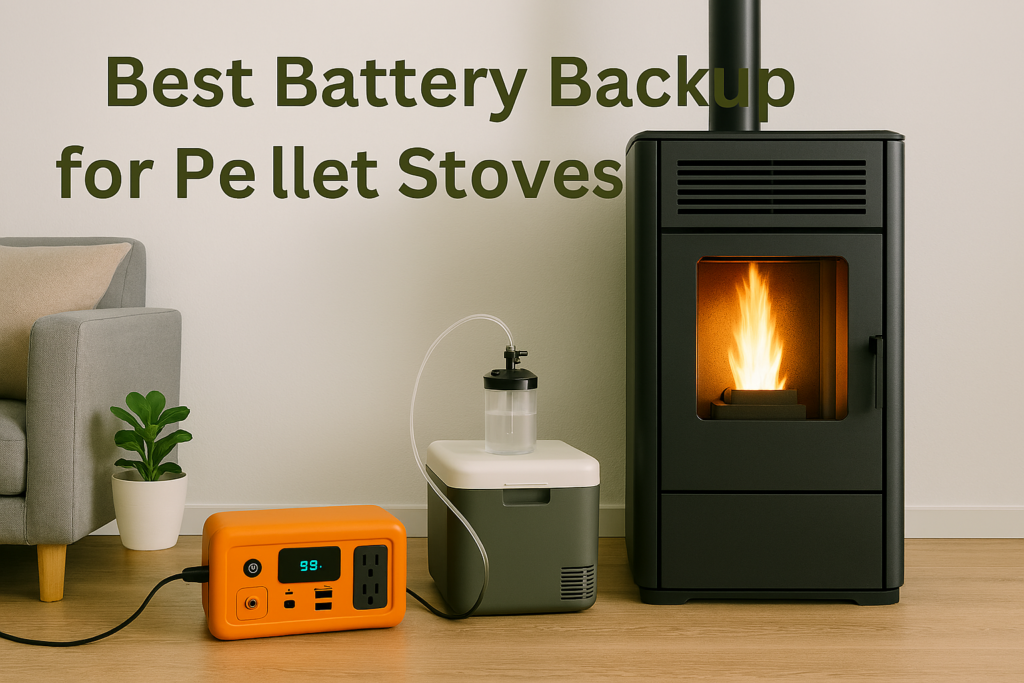
Pellet stoves rely on electricity to power their ignition systems, blowers, augers, and control boards. During a power outage, a pellet stove without backup power shuts down immediately — often leaving your home without heat when you need it most. Because pellet stoves have a high ignition surge and continuous blower draw, it helps to choose a battery backup system with strong surge handling, stable pure sine wave output, and enough capacity to run your stove safely for hours.
This guide compares the best battery backup systems for pellet stoves across real‑world scenarios, including ignition surges, blower runtimes, and multi‑hour heating needs. Each recommendation includes surge handling, runtime expectations, and emergency‑ready performance so you can keep your home warm during outages.
Best Pellet Stove Battery Backup Systems — Quick Comparison
This comparison table gives you a fast overview of the top battery backup systems for pellet stoves. It highlights surge output, capacity, runtime, and best‑use scenarios so you can quickly identify the right model for your heating setup.
| Model | Best For | Capacity | Surge Output | Runtime (Pellet Stove) |
|---|---|---|---|---|
| EcoFlow Delta 2 | Most pellet stoves | 1024Wh | 2700W | 6–10 hours |
| Bluetti AC200MAX | Long heating outages | 2048Wh | 4800W | 12–20 hours |
| EcoFlow Delta Pro | High‑surge ignition systems | 3600Wh | 7200W | 20–36 hours |
| Jackery Explorer 1000 Plus | Budget setups | 1264Wh | 2000W | 6–12 hours |
| Bluetti EB70S | Small pellet stoves | 716Wh | 1400W | 3–6 hours |
Best Pellet Stove Battery Backup Systems by Scenario
Pellet stoves rely on multiple electrical components — ignition systems, blowers, augers, and control boards — all of which must stay powered for safe operation. Ignition requires a high surge, while continuous heating demands steady wattage for hours. Matching your battery backup to your stove’s surge draw and runtime needs ensures your home stays warm during outages.
EcoFlow Delta 2
Definition: This category is for homeowners who want a reliable, fast‑charging backup that can handle ignition surges and continuous blower operation.
The EcoFlow Delta 2 delivers 1024Wh of LiFePO4 storage and a powerful 1800W inverter with 2700W surge — enough to start and run nearly all pellet stoves. It also charges extremely fast, making it ideal for last‑minute storm prep.
| Capacity | 1024Wh |
|---|---|
| Surge Output | 2700W |
| Runtime (Pellet Stove) | 6–10 hours |
| Best Use | Most pellet stoves |
Pros
- Strong surge handling for ignition
- Fastest AC charging in class
- Lightweight and portable
Cons
- Expansion battery adds cost
- Not ideal for multi‑day outages
Bluetti AC200MAX
Definition: This category is for homes that experience long outages and need extended runtime for pellet stove heating.
The Bluetti AC200MAX offers 2048Wh of LiFePO4 storage, a 2200W inverter, and a massive 4800W surge — ideal for high‑surge ignition systems and long heating cycles.
| Capacity | 2048Wh |
|---|---|
| Surge Output | 4800W |
| Runtime (Pellet Stove) | 12–20 hours |
| Best Use | Long outages + high‑surge stoves |
Pros
- Huge surge capacity
- Long runtime
- High solar input for multi‑day storms
Cons
- Heavy
- Slower AC charging than EcoFlow
EcoFlow Delta Pro
Definition: This category is for pellet stoves with powerful ignition systems that require extremely high surge wattage.
The EcoFlow Delta Pro delivers 3600Wh of storage and a massive 7200W surge — enough to start even the most demanding pellet stoves. It also supports home transfer switches for whole‑home emergency integration.
| Capacity | 3600Wh |
|---|---|
| Surge Output | 7200W |
| Runtime (Pellet Stove) | 20–36 hours |
| Best Use | High‑surge ignition + whole‑home backup |
Pros
- Strongest surge output available
- Supports transfer switches
- Expandable to 25kWh+
Cons
- Very heavy
- Premium price
Popular Pellet Stove Backup Accessories
These accessories help extend runtime, improve surge handling, and protect your pellet stove during outages.
200W Folding Solar Panel
Provides fast solar charging during long outages when grid power is unavailable.
| Wattage | 200W |
|---|---|
| Use Case | Solar charging |
Victron SmartShunt Battery Monitor
Provides accurate state‑of‑charge readings and Bluetooth monitoring for your pellet stove backup system.
| Connectivity | Bluetooth |
|---|---|
| Benefit | Accurate SOC tracking |
ANL Fuse Kit (200A)
Protects your wiring and battery bank from short circuits and high‑current faults.
| Rating | 200A |
|---|---|
| Use Case | Battery bank protection |
4AWG Battery Cable Set
Heavy‑gauge wiring ensures safe, low‑resistance connections for high‑surge pellet stove systems.
| Gauge | 4AWG |
|---|---|
| Use Case | Battery + inverter wiring |
How to Choose the Best Pellet Stove Battery Backup System
Choosing the right pellet stove battery backup system starts with understanding your stove’s ignition surge, blower wattage, and continuous runtime needs. Pellet stoves draw a large surge during ignition — often 2–3× their running wattage — and then require steady power for blowers, augers, and control boards. Because outages often occur during winter storms, it helps to choose a system with strong surge handling, deep capacity, and reliable runtime under continuous load.
| Factor | What to Consider |
|---|---|
| Surge Output | Most pellet stoves need 800–1200W surge for ignition. |
| Battery Capacity | 500–1500Wh covers short outages; 2000–3600Wh supports long heating cycles. |
| Cycle Life | LiFePO4 batteries offer 3000–6000 cycles and are ideal for emergency heating. |
| Solar Input | High solar input helps during multi‑day winter outages. |
| Expandability | Expansion batteries extend runtime for large pellet stoves. |
People Also Ask (Quick Answers)
How much power does a pellet stove need?
Most pellet stoves need 400–600W running and 800–1200W surge.
Can a portable power station run a pellet stove?
Yes — as long as the inverter can handle the ignition surge.
How long will a battery backup run a pellet stove?
Runtime varies by stove size and blower speed, but 1000Wh typically lasts 6–10 hours.
Do I need solar panels for pellet stove backup?
No — but solar helps extend runtime during long winter outages.
Real Pellet Stove Runtime Examples
These examples show how long common pellet stove sizes can run on different battery capacities. Actual runtime varies based on blower speed and ignition cycles, but these estimates provide a realistic baseline for planning your emergency heating setup.
| Stove Size | Typical Surge | 1000Wh Unit | 2000Wh Unit | 3600Wh Unit |
|---|---|---|---|---|
| Small Pellet Stove | 800–1000W | 6–10 hours | 12–20 hours | 20–36 hours |
| Medium Pellet Stove | 900–1200W | 5–8 hours | 10–16 hours | 18–30 hours |
| Large Pellet Stove | 1000–1500W | 4–7 hours | 8–14 hours | 16–28 hours |
Common Mistakes When Choosing a Pellet Stove Battery Backup
- Undersizing the inverter: Pellet stoves require high surge wattage during ignition.
- Ignoring blower wattage: Blowers run continuously and determine runtime.
- Choosing slow‑charging models: Fast AC charging is critical for winter storm prep.
- Not checking stove size: Larger stoves need significantly more surge power.
- Skipping expansion planning: Homes relying on pellet stoves for primary heat often need more runtime.
FAQ: Pellet Stove Battery Backup Systems
Can I run my pellet stove off a battery during a storm?
Yes — as long as the inverter can handle the ignition surge.
Do I need a pure sine wave inverter?
Yes — pellet stoves require pure sine wave output for safe operation.
Can I charge a battery backup with a generator?
Yes — most systems support generator charging for extended outages.
Is 1000Wh enough for pellet stove backup?
It works for short outages; 2000–3600Wh is better for long heating cycles.
🔥 Explore More Emergency Heating Guides
Stay warm and prepared with our full collection of battery, inverter, and off‑grid heating guides.