Best Battery Backup for Overlanding – Reviews – Comparisons – Buyer Insight
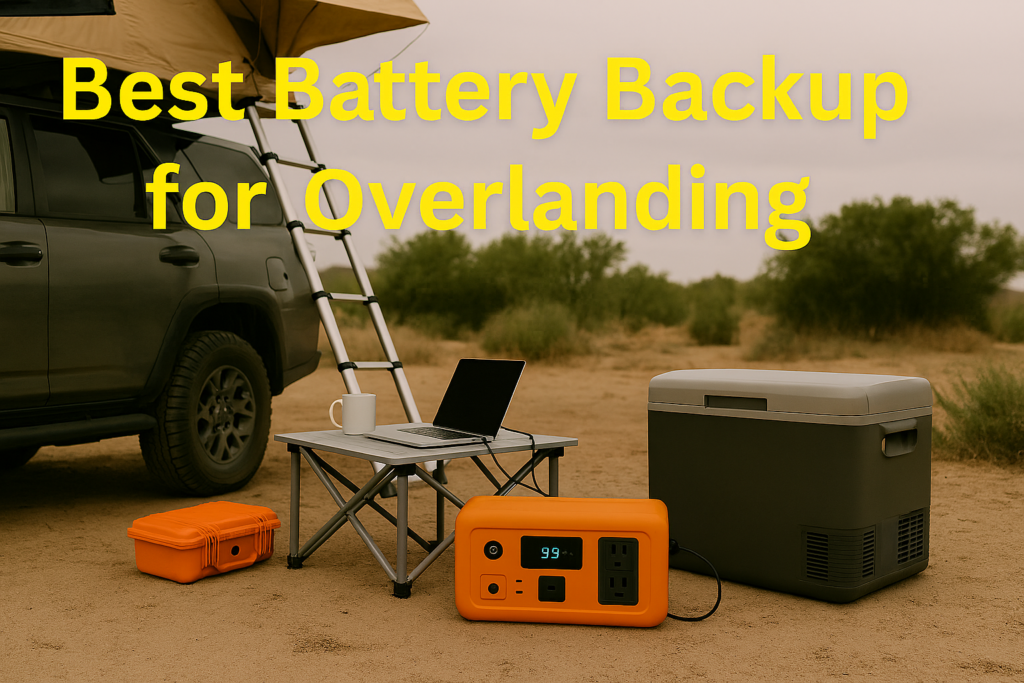
Overlanding demands reliable power far from the grid. Whether you’re running a 12V fridge, charging radios, powering camp lights, inflating tires, or keeping tools ready, a dependable battery backup system becomes the heart of your off‑grid setup. Because overlanding involves long days, remote terrain, and unpredictable weather, it helps to choose a power station with strong inverter output, high solar input, and rugged build quality.
This guide compares the best battery backup systems for overlanding across real‑world scenarios, including fridge power, camp lighting, tool charging, and multi‑day off‑grid travel. Each recommendation includes inverter strength, runtime expectations, solar performance, and durability so you can build a reliable overland power system.
Best Overlanding Battery Backup Systems — Quick Comparison
This comparison table gives you a fast overview of the top battery backup systems for overlanding. It highlights inverter output, capacity, solar input, and best‑use scenarios so you can quickly identify the right model for your rig.
| Model | Best For | Capacity | Inverter Output | Solar Input |
|---|---|---|---|---|
| EcoFlow Delta 2 | Most overlanders | 1024Wh | 1800W | 500W |
| Bluetti AC200MAX | Long trips | 2048Wh | 2200W | 900W |
| EcoFlow Delta Pro | Full off‑grid rigs | 3600Wh | 3600W | 1600W |
| Jackery Explorer 1000 Plus | Budget builds | 1264Wh | 2000W | 400W |
| Bluetti EB70S | Lightweight setups | 716Wh | 800W | 200W |
Best Overlanding Battery Backup Systems by Scenario
Overlanding power needs vary widely — from running a 12V fridge to charging radios, powering lights, inflating tires, or running tools. Because you’re often days from the grid, it helps to choose a battery backup system with strong inverter output, high solar input, and rugged reliability. These recommendations cover the most common overlanding setups.
EcoFlow Delta 2
Definition: This category is for overlanders who want a lightweight, fast‑charging, high‑output power station that handles fridges, lights, radios, and camp gear with ease.
The EcoFlow Delta 2 delivers 1024Wh of LiFePO4 storage and a strong 1800W inverter — enough to run a 12V fridge for days with solar input. Its 500W solar input is one of the fastest in its class, making it ideal for multi‑day off‑grid travel.
| Capacity | 1024Wh |
|---|---|
| Inverter Output | 1800W |
| Solar Input | 500W |
| Best Use | Most overlanding rigs |
Pros
- Fastest AC charging in class
- Strong solar input
- Lightweight and compact
Cons
- Expansion battery adds cost
- Not ideal for heavy tool use
Bluetti AC200MAX
Definition: This category is for overlanders who spend multiple days off‑grid and need long runtime for fridges, lights, radios, and tools.
The Bluetti AC200MAX offers 2048Wh of LiFePO4 storage, a 2200W inverter, and a massive 900W solar input — ideal for long‑duration off‑grid travel with high daily power needs.
| Capacity | 2048Wh |
|---|---|
| Inverter Output | 2200W |
| Solar Input | 900W |
| Best Use | Multi‑day overlanding |
Pros
- Huge solar input
- Long runtime
- Excellent for fridges + tools
Cons
- Heavy
- Slower AC charging than EcoFlow
EcoFlow Delta Pro
Definition: This category is for overlanders running full off‑grid setups — fridges, induction cookers, tools, lights, radios, and more.
The EcoFlow Delta Pro delivers 3600Wh of storage, a 3600W inverter, and an incredible 1600W solar input — enough to power an entire overlanding basecamp.
| Capacity | 3600Wh |
|---|---|
| Inverter Output | 3600W |
| Solar Input | 1600W |
| Best Use | Full off‑grid overlanding rigs |
Pros
- Massive capacity
- Fast solar charging
- Runs heavy tools + appliances
Cons
- Very heavy
- Premium price
Popular Overlanding Power Accessories
These accessories help extend runtime, improve solar performance, and support off‑grid reliability.
200W Folding Solar Panel
Lightweight, portable, and ideal for topping off your power station during long trips.
| Wattage | 200W |
|---|---|
| Use Case | Solar charging |
Victron SmartShunt Battery Monitor
Provides accurate state‑of‑charge readings and Bluetooth monitoring for your overlanding power system.
| Connectivity | Bluetooth |
|---|---|
| Benefit | Accurate SOC tracking |
ANL Fuse Kit (200A)
Protects your wiring and battery bank from short circuits and high‑current faults.
| Rating | 200A |
|---|---|
| Use Case | Battery bank protection |
4AWG Battery Cable Set
Heavy‑gauge wiring ensures safe, low‑resistance connections for high‑demand overlanding systems.
| Gauge | 4AWG |
|---|---|
| Use Case | Battery + inverter wiring |
How to Choose the Best Overlanding Battery Backup System
Choosing the right battery backup system for overlanding starts with understanding your rig’s power profile. Overlanders typically run a 12V fridge, lights, radios, air compressors, GPS units, and sometimes tools or cooking gear. Because you’re often far from the grid, it helps to choose a system with strong inverter output, high solar input, and enough capacity to last through cloudy days or long drives.
| Factor | What to Consider |
|---|---|
| Inverter Output | 800–2000W covers most rigs; 3000W+ for tools and heavy appliances. |
| Battery Capacity | 500–1500Wh for weekend trips; 2000–3600Wh for multi‑day off‑grid travel. |
| Solar Input | Higher input (500–1600W) means faster recovery during cloudy days. |
| Durability | Look for rugged housings, reinforced corners, and wide temperature tolerance. |
| Expandability | Expansion batteries extend runtime for long expeditions. |
People Also Ask (Quick Answers)
How much power do I need for overlanding?
Most rigs need 500–1500Wh for weekend trips and 2000–3600Wh for multi‑day off‑grid travel.
Can a portable power station run a 12V fridge?
Yes — most 12V fridges draw 40–70W and run efficiently on LiFePO4 power stations.
How long will a battery backup run a fridge?
1000Wh typically runs a 12V fridge for 20–40 hours depending on ambient temperature.
Do I need solar panels for overlanding?
No — but solar dramatically extends runtime and reduces generator use.
Real Overlanding Runtime Examples
These examples show how long common overlanding gear can run on different battery capacities. Actual runtime varies based on temperature, compressor cycles, and device efficiency, but these estimates provide a realistic baseline for planning your off‑grid setup.
| Device | Typical Wattage | 1000Wh Unit | 2000Wh Unit | 3600Wh Unit |
|---|---|---|---|---|
| 12V Fridge (50W avg) | 40–70W | 20–40 hours | 40–80 hours | 70–140 hours |
| Camp Lights | 10–30W | 40–100 hours | 80–200 hours | 150–350 hours |
| HAM/GMRS Radio | 20–50W | 20–50 hours | 40–100 hours | 70–180 hours |
| Air Compressor | 300–600W | 1–2 hours | 2–4 hours | 4–7 hours |
| Drone Charging | 60–100W | 10–15 charges | 20–30 charges | 35–50 charges |
Common Mistakes When Choosing an Overlanding Battery Backup
- Undersizing solar input: Solar is the lifeline for multi‑day off‑grid travel.
- Ignoring inverter output: Tools and compressors require high wattage.
- Choosing slow‑charging models: Fast AC charging is critical between trail segments.
- Not planning for fridge cycling: Fridges draw more power in hot climates.
- Skipping expansion planning: Long expeditions often need more capacity.
FAQ: Overlanding Battery Backup Systems
Can I run my entire overlanding setup off a battery?
Yes — with a large enough inverter and battery capacity.
Do I need pure sine wave output?
Yes — fridges, radios, and tools run best on pure sine wave power.
Can I charge a power station from my vehicle?
Yes — most support 12V car charging while driving.
Is 1000Wh enough for overlanding?
It works for weekend trips; 2000–3600Wh is better for multi‑day travel.
🏕️ Explore More Off‑Grid Power Guides
Build a reliable overlanding power system with our full collection of battery, inverter, and solar guides.